
What Is a Landing Page and Why Do St. George, Utah Businesses Need One for Google Ads?
If you’re running Google Ads for your St. George, Utah business and sending clicks to your homepage, you’re almost certainly wasting money. A dedicated landing page for Google Ads is one of the highest-impact changes any Southern Utah small business can make to its paid search campaigns. This guide explains exactly what a landing page is, how it works alongside Google Ads, why it matters for businesses in St. George and the surrounding Washington County area, and what separates a high-converting page from one that bleeds your ad budget dry. Whether you’re a contractor in Hurricane, a med spa in Ivins, or a retail shop on St. George Boulevard, the principles here apply directly to your situation. By the end, you’ll know what to build, what to fix, and when to bring in professional help.
What Is a Landing Page?
A landing page is a standalone web page built for one specific purpose: to convert a visitor into a lead or customer. Unlike your homepage, which serves many audiences and covers many topics, a landing page has a single message and a single action you want the visitor to take. That action might be filling out a contact form, calling your business, booking an appointment, or downloading a guide.
The term “landing page” comes from the idea that a visitor “lands” on this page after clicking a specific link, most often a paid ad. Because you know exactly where that visitor came from and what they searched for, you can tailor the page’s content to match their intent almost perfectly. That match between ad message and page content is what drives conversions.
In the context of PPC advertising, a landing page is not optional. It is the destination that determines whether your ad spend turns into revenue or disappears into the internet with nothing to show for it.
Homepage vs. Landing Page: Why the Difference Costs You Money
Your homepage is designed for everyone. It introduces your brand, lists your services, links to your blog, and maybe includes a contact form somewhere near the bottom. That broad scope is useful for organic visitors who are just getting to know you, but it is a conversion killer for paid traffic.
When someone clicks a Google Ad for “emergency HVAC repair St. George Utah” and lands on your homepage, they have to hunt for the information they need. They see your company history, your full list of services, your latest promotions, and a navigation bar with eight options. Most people will not do that work. They will click the back button and call your competitor instead.
A dedicated landing page removes every distraction. The visitor who clicked that HVAC ad arrives on a page that says exactly what they need to hear: “24-Hour Emergency HVAC Repair in St. George, Utah. Call Now.” There is nothing else to click, read, or decide. That focus is why landing pages consistently outperform homepages for paid search traffic.
Why Google Ads Specifically Needs a Dedicated Landing Page
Google Ads operates on intent. Someone types a specific phrase into Google because they have a specific need right now. Your ad appears because you bid on that phrase. The click costs you real money, often anywhere from two to fifteen dollars or more depending on the industry and competition in Southern Utah. What happens after that click is entirely up to your landing page.
Paid traffic is fundamentally different from organic traffic. Organic visitors are often browsing, researching, or comparing. Paid visitors have already decided they want something. Your job is not to convince them to want it, your job is to make it as easy as possible for them to choose you. A tailored landing page does exactly that.
There is also a financial argument worth making clearly. If your landing page converts at 2% and you drive 100 clicks at five dollars each, you spend five hundred dollars to get two leads. If you improve that landing page to convert at 6%, the same five hundred dollars produces six leads. You tripled your results without spending an extra dollar on ads. That is the real power of a well-built PPC landing page for a St. George business.
How Landing Pages Affect Your Google Ads Quality Score
Google does not just take your money and run your ad. It evaluates the quality of your entire campaign, and your landing page is a significant part of that evaluation. Google assigns each of your keywords a Quality Score on a scale of one to ten. A higher Quality Score means lower costs per click and better ad placement.
Your landing page contributes to Quality Score through what Google calls “Landing Page Experience.” Google evaluates whether your page is relevant to the ad and keyword, whether it loads quickly, whether it works well on mobile devices, and whether it is easy for visitors to navigate and find what they need.
A poor landing page experience can raise your cost per click significantly, meaning you pay more for the same position than a competitor with a better page. A strong landing page experience can lower your costs and push your ad higher in the results. This is a direct, measurable financial impact that affects every campaign you run.
The Anatomy of a High-Converting PPC Landing Page
Not all landing pages are created equal. The difference between a page that converts at 2% and one that converts at 8% comes down to a handful of specific elements. Here is what every Google Ads landing page for a St. George small business needs.
Headline That Matches the Ad
The headline is the first thing a visitor reads, and it needs to mirror the language of the ad they clicked. This is called message match. If your ad says “Affordable Plumbing in St. George, Utah,” your landing page headline should say something nearly identical, not something generic like “Welcome to Our Website.” When visitors see a clear connection between the ad and the page, they feel confident they are in the right place and they stay.
Message match also signals relevance to Google, which supports your Quality Score. Write your headline before you write anything else on the page, and write your ad copy and headline at the same time so they are naturally consistent.
One Clear Call to Action
Every landing page needs one primary call to action and ideally only one. If you ask visitors to call you, fill out a form, download a guide, and follow you on social media all at once, most of them will do nothing. The psychology here is well-documented: more choices lead to less action.
Decide what the single most valuable action is for your business. For most St. George service businesses, that is a phone call or a form submission. Put that action above the fold where it is visible without scrolling, repeat it at the bottom of the page, and make the button or link stand out visually. Keep form fields to the minimum necessary, typically name, phone number, and one qualifying question.
Trust Signals and Social Proof
People searching for a business in Washington County have options. They can choose from multiple local providers, and they are cautious about who they give their money or contact information to. Trust signals reduce that friction. Trust signals include Google reviews and star ratings, client testimonials with full names, before-and-after photos, professional certifications or licenses, and any media mentions or awards.
For Southern Utah businesses specifically, mentioning local landmarks, neighborhoods, or community involvement helps too. A testimonial from someone in Santa Clara or Cedar City reads as more credible to a local visitor than a generic five-star quote with no context. Real specificity builds trust faster than any amount of polished copywriting.
Mobile Speed and Load Time
According to Google’s own data, more than half of all paid search clicks come from mobile devices. If your landing page loads slowly or breaks on a phone screen, you are losing more than half of your paid traffic before they even read a single word. Google’s Core Web Vitals benchmarks suggest a page should load its main content in under 2.5 seconds on a typical connection.
For local service businesses in St. George, mobile optimization is not a nice-to-have. Many of your customers are searching from a job site, a car, or a waiting room. They are not sitting at a desktop with patience to spare. A fast, clean, mobile-first landing page is one of the most direct ways to improve both Quality Score and conversion rate simultaneously.
The St. George, Utah Context: What Local Businesses Face
St. George has grown rapidly over the past decade. Washington County is now one of the fastest-growing counties in the United States, which means more competition across nearly every industry, from home services and healthcare to legal, dental, and retail. More businesses are running Google Ads, which drives up cost-per-click prices across local keywords.
That competitive pressure makes landing page quality more important, not less. When your competitors are also running ads, the business that converts its clicks most efficiently wins. Spending five hundred dollars a month on ads and converting at 8% will beat a competitor spending two thousand dollars a month and converting at 2% every single time.
There is also a seasonality factor in Southern Utah. Businesses tied to tourism, construction, landscaping, and outdoor recreation see significant traffic swings throughout the year. Building campaign-specific landing pages for peak seasons, and then updating those pages to reflect current offers and availability, keeps your paid search results relevant year-round.
Common Landing Page Mistakes That Kill ROI
The most common mistake is sending all paid traffic to the homepage. We covered that above, but it is worth repeating because it is so widespread and so costly. The second most common mistake is building a landing page and then never testing or updating it. A page that worked well eighteen months ago may not reflect your current offers, may have outdated testimonials, or may have technical issues from a website update.
Another frequent problem is too much copy. Small business owners often feel the need to explain everything about their company on a single page. Visitors to a PPC landing page did not ask for your company history. They asked for a specific solution. Give them that solution clearly, back it up with evidence, and ask them to take one action. That is all.
Finally, many businesses skip split testing entirely. You do not need a massive budget to test two versions of a headline or a call-to-action button. Running even basic A/B tests on your landing pages over time produces real data about what resonates with St. George customers and what falls flat.
Ready to Grow Your St. George Business?
Timpson Marketing builds SEO, PPC, social media, and web design strategies that drive real results for Southern Utah businesses.
The Connection Between Landing Pages and Conversion Rate Optimization
A landing page does not exist in isolation. It is part of a broader strategy called conversion rate optimization, or CRO, which is the practice of systematically improving the percentage of visitors who take the action you want. If you want a full breakdown of how CRO works beyond landing pages, read our guide on what conversion rate optimization is and how it applies to your St. George business.
CRO and landing pages work together in a continuous loop. You build a landing page, drive paid traffic to it, measure the conversion rate, identify weak points through heatmaps or session recordings, make changes, and then test those changes. Over time, that process compounds. Small improvements to your conversion rate, built up over months, can dramatically reduce your cost per lead and improve the overall return on your ad spend.
The critical insight here is that getting more traffic is not always the answer. Sometimes the best investment is not more ad budget, but a better page to send your existing traffic to. For many St. George businesses, improving landing page performance delivers faster and cheaper results than simply increasing daily ad spend.
How to Get Started With a Landing Page for Your Google Ads Campaign
The first step is to audit what you are currently doing. Pull up your active Google Ads campaigns and check where each ad group is sending clicks. If any ad group is pointing to a homepage or a general service page, that is your first priority to fix.
Next, map each ad group to a specific visitor intent and write a landing page for that intent. A roofing company might need separate landing pages for roof replacement, storm damage repair, and new construction. Each of those audiences has different needs, different objections, and different language. One generic page cannot serve all three well.
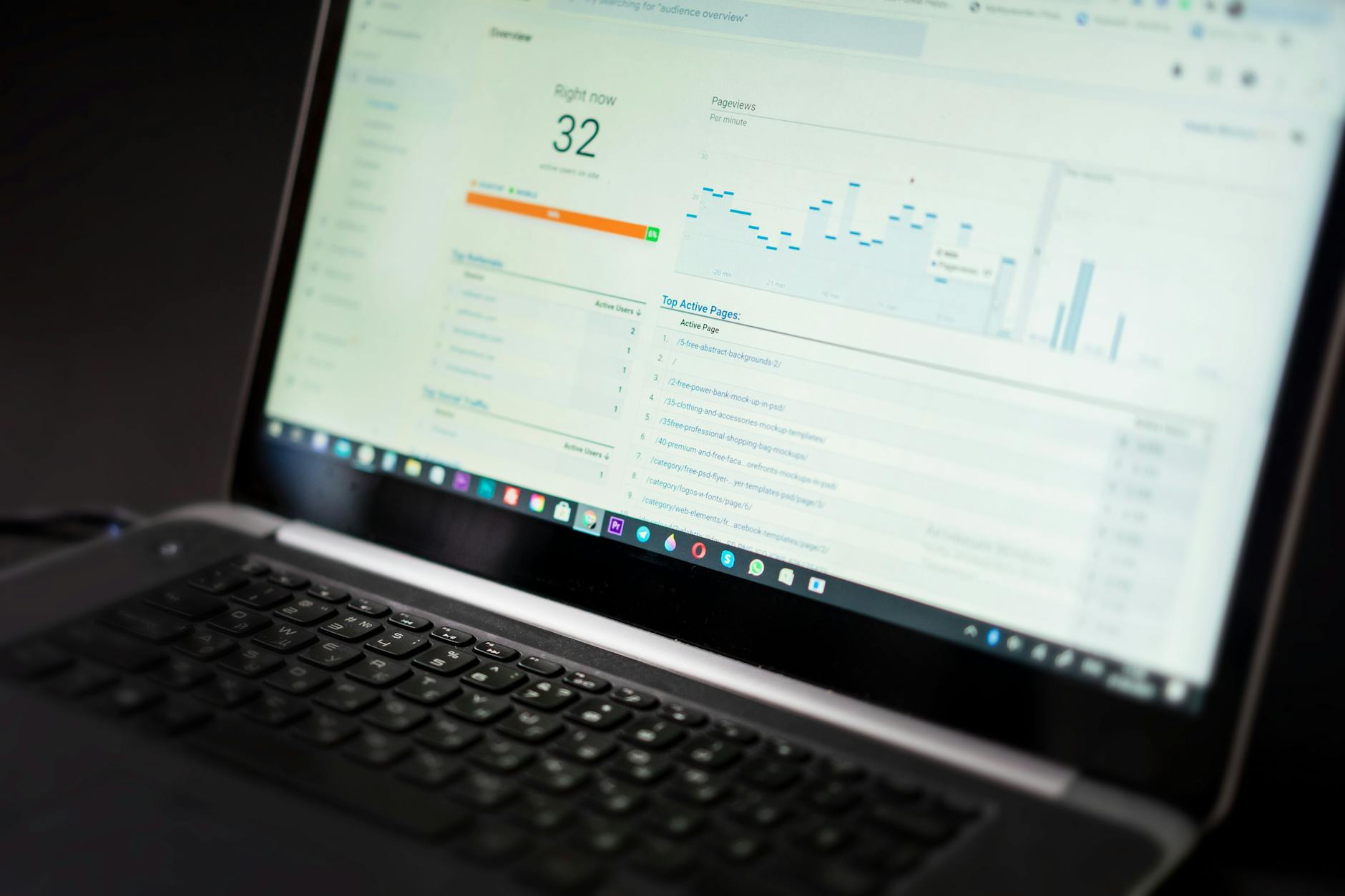
Once your pages are live, connect them to Google Analytics and set up conversion tracking in Google Ads so you can see exactly which pages and campaigns are generating leads. Without that data, you are flying blind. If you want to get your ads right from the start, our post on how to write a Google Ad that converts covers the copy side of the equation in detail.
If building and testing landing pages sounds like more than you want to manage on top of running your business, that is a completely reasonable conclusion. This is the kind of work that takes time, technical knowledge, and ongoing attention to do well. Working with a St. George PPC agency that understands both the technical and creative sides of conversion is often the most efficient path forward for busy business owners across Southern Utah.
Frequently Asked Questions
1. What is a landing page in the context of Google Ads?
A landing page is a standalone web page that a visitor arrives on after clicking a Google Ad. It is designed with a single purpose, typically to generate a lead, phone call, or sale, and it contains no navigation or distractions that might pull the visitor away from that goal. Unlike a homepage, a landing page is written specifically to match the intent of the ad and the keyword that triggered it. For businesses running paid search campaigns in St


Leave A Comment